

Home BP Monitor Guide: Check Correctly
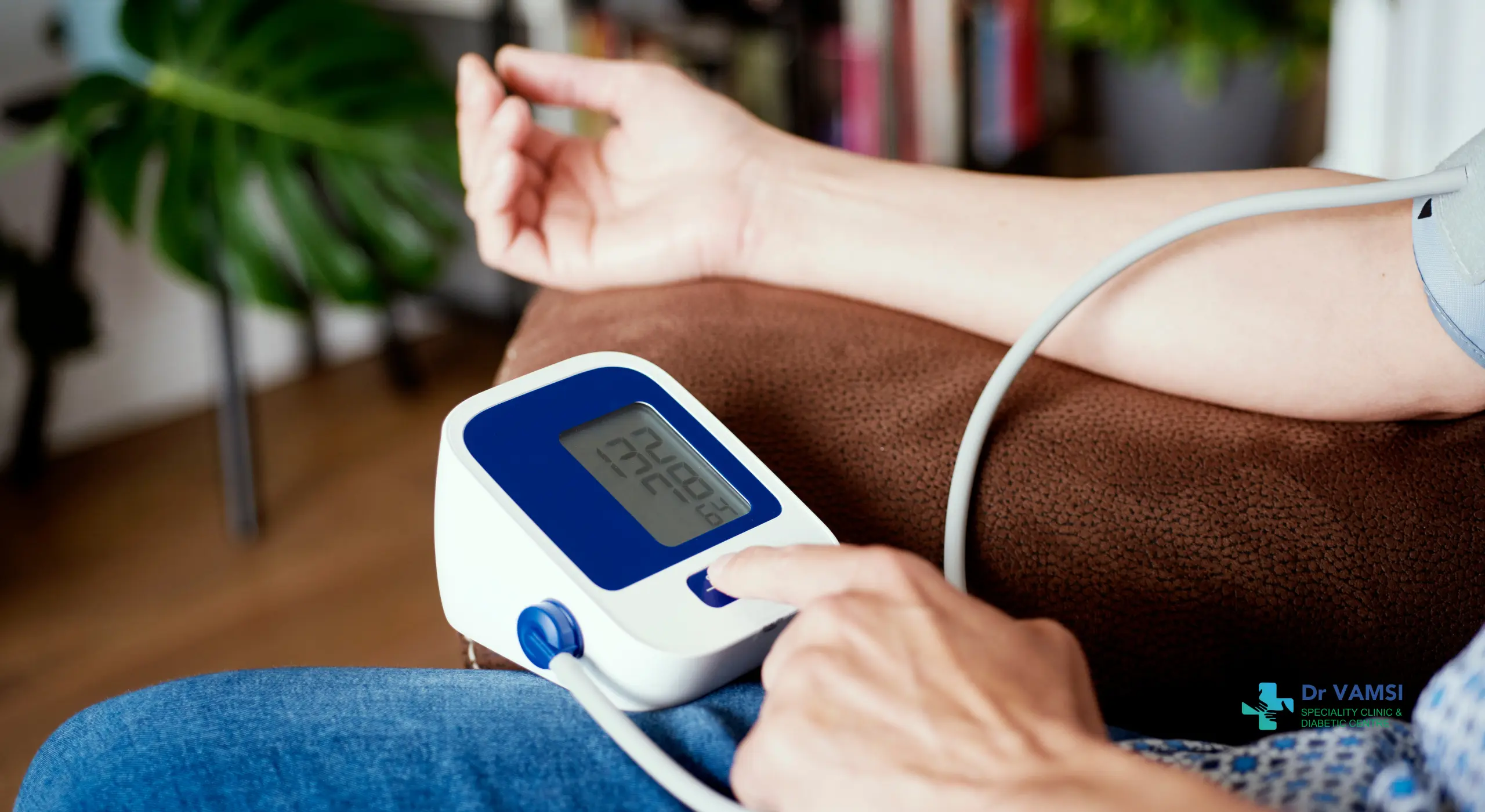
Table of Contents
Home BP Monitor Guide
Why Accurate Home BP Matters
Blood pressure measurement
Home blood pressure monitoring gives better insight than clinic readings alone, catching daily patterns that reveal true control. Wrong technique causes readings 10-20 mmHg off, leading to wrong treatment decisions. Clinics like Dr. Vamsi Speciality Clinic use patient home logs to fine-tune medications safely.
Home vs clinic advantage: Reveals white coat hypertension (high only at doctor) or masked hypertension (normal clinic, high home)—both need different management.
This photo shows proper digital monitor cuff placement on bare upper arm, displaying typical 130/80 reading.
Choose Right Monitor First
Automatic upper-arm cuff (Omron, Dr. Trust) most reliable—avoid wrist/finger models. Key features:
- Validated (check validatebp.org)
- Correct cuff size (measure upper arm midpoint)
- Memory function for doctor review
- Large display
Cuff sizing chart:
| Arm Circumference | Cuff Size |
| 22-32 cm | Standard |
| 32-42 cm | Large |
| 42-50 cm | Extra Large |
Too small cuff = falsely high readings; too large = falsely low.
Home BP monitor guide
Perfect Pre-Measurement Setup
30 minutes before: No caffeine, tobacco, exercise or heavy meal.
5 minutes before:
- Empty bladder (full bladder raises BP 10 mmHg)
- Sit quietly—no talking, phone use
- Remove tight clothing
Correct Body Position
Seating position (most important):
- Back supported against chair
- Feet flat on floor (never cross legs)
- Bare upper arm at heart level on table
- Palm up, relaxed
- Legs uncrossed
Wrong positions (raise readings 10-20 mmHg):
❌ Arm hanging down
❌ Standing
❌ Legs crossed
❌ Back unsupported
❌ Cuff over clothing
Home BP monitor guide
Step-by-Step Measurement
1. Prepare cuff:
- Bottom edge 2-3 cm above elbow bend
- Tubing over front arm center (sensor position)
- Snug but not tight (1 finger under edge)
- Bare arm—no shirt sleeve
2. Final position check:
✅ Feet flat
✅ Back supported
✅ Arm heart level
✅ Quiet room
✅ Relaxed 5 minutes
3. Take readings:
1st reading → Wait 1 minute → 2nd reading
Average = your true BP
Never single readings.
4. Record: Time, position, readings, arm used
Best Daily Schedule
Morning (before meds): 7-9 AM
Evening (before dinner): 6-8 PM
7-day pattern for doctor review:
Day 1: 132/84, 128/82 → Average 130/83
Day 2: 136/86, 130/84 → Average 133/85
…etc
Weekly average more reliable than single readings.
Home BP monitor guide
What Numbers Mean
Home target (5-10 mmHg lower than clinic):
| Reading | Action |
| <135/85 | Good control |
| 135-149/85-94 | Lifestyle focus |
| ≥150/95 | Doctor contact |
Common Measurement Mistakes
| ❌ Wrong | ✅ Correct | Error |
| Talking | Silent | +10 mmHg |
| Feet dangling | Feet flat | +6 mmHg |
| Arm below heart | Heart level | +10 mmHg |
| Single reading | 2 readings | Variable |
| Tight clothing | Bare arm | +5-15 mmHg |
| After coffee | 30 min wait | +5-10 mmHg |
Calibration: Take monitor to clinic yearly for validation.
Home BP monitor guide
Troubleshooting High Readings
If consistently >140/90 at home:
1. Double-check technique (most common cause)
2. 7-day log for doctor
3. Don’t adjust meds yourself
4. Note symptoms/context
Cold arms/shaking: Wait, rewarm, repeat.
Sharing Results with Doctor
Perfect log format:
Date | Time | 1st Reading | 2nd Reading | Average | Notes
04/30 | 7:15AM | 138/86 | 134/84 | 136/85 | Pre-meds
04/30 | 7:10PM | 132/82 | 128/80 | 130/81 | Post-walk
Weekly average summary best for treatment decisions.
Special Situations
Pregnancy: Right arm, validated pregnancy monitor
Large arms: Extra-large cuff essential
Arrhythmia: Devices with AFib detection
Elderly: Support arm, slow inflation
Maintenance Tips
- Store: Room temperature, dry
- Battery: Replace yearly
- Clean: Wipe cuff with damp cloth weekly
- Cuff: Check wear/tear monthly
Replace monitor every 3-5 years.
When to Call Doctor Immediately
Single reading >180/110 + symptoms (headache, vision change, chest pain) = emergency
Pattern >160/100 despite correct technique = urgent review
Home monitoring prevents crises when done right.
FAQs on Home BP Monitor
1. How often should I measure BP at home?
Twice daily (morning pre-meds, evening) for 7 days when starting/changing treatment.
2. Why are home readings lower than clinic?
Normal, relaxed home environment. Clinic stress raises readings 5-15 mmHg.
3. Does arm matter (left vs right)?
Difference >10 mmHg needs doctor check. Usually left arm standard.
4. Wrist monitors accurate?
No, heart level positioning impossible. Use only upper arm cuffs.
5. What if first reading high, second normal?
Average both. Repeat next day. Single highs usually technique/stress.