

High Blood Pressure: Silent Killer Detection Guide
Why High Blood Pressure is Called the Silent Killer
High blood pressure, or hypertension, earns its “silent killer” nickname because it damages arteries, heart, kidneys and brain for years without symptoms. By the time headaches or chest pain appear, often permanent harm exists. Globally, it causes 13% of deaths; in India, 1 in 4 adults affected, especially urban 30-50-year-olds.
Clinics like Dr. Vamsi Speciality Clinic in Whitefield, Bengaluru, diagnose it routinely during checkups. Early detection via simple measurements prevents 80% of strokes and heart attacks.
What Numbers Mean: Understanding BP Readings
Blood pressure measures systolic (heart contracting) over diastolic (resting) in mmHg:
| Category | Systolic | Diastolic |
| Normal | <120 | <80 |
| Elevated | 120-129 | <80 |
| Stage 1 Hypertension | 130-139 | 80-89 |
| Stage 2 | ≥140 | ≥90 |
| Crisis | >180 | >120 |
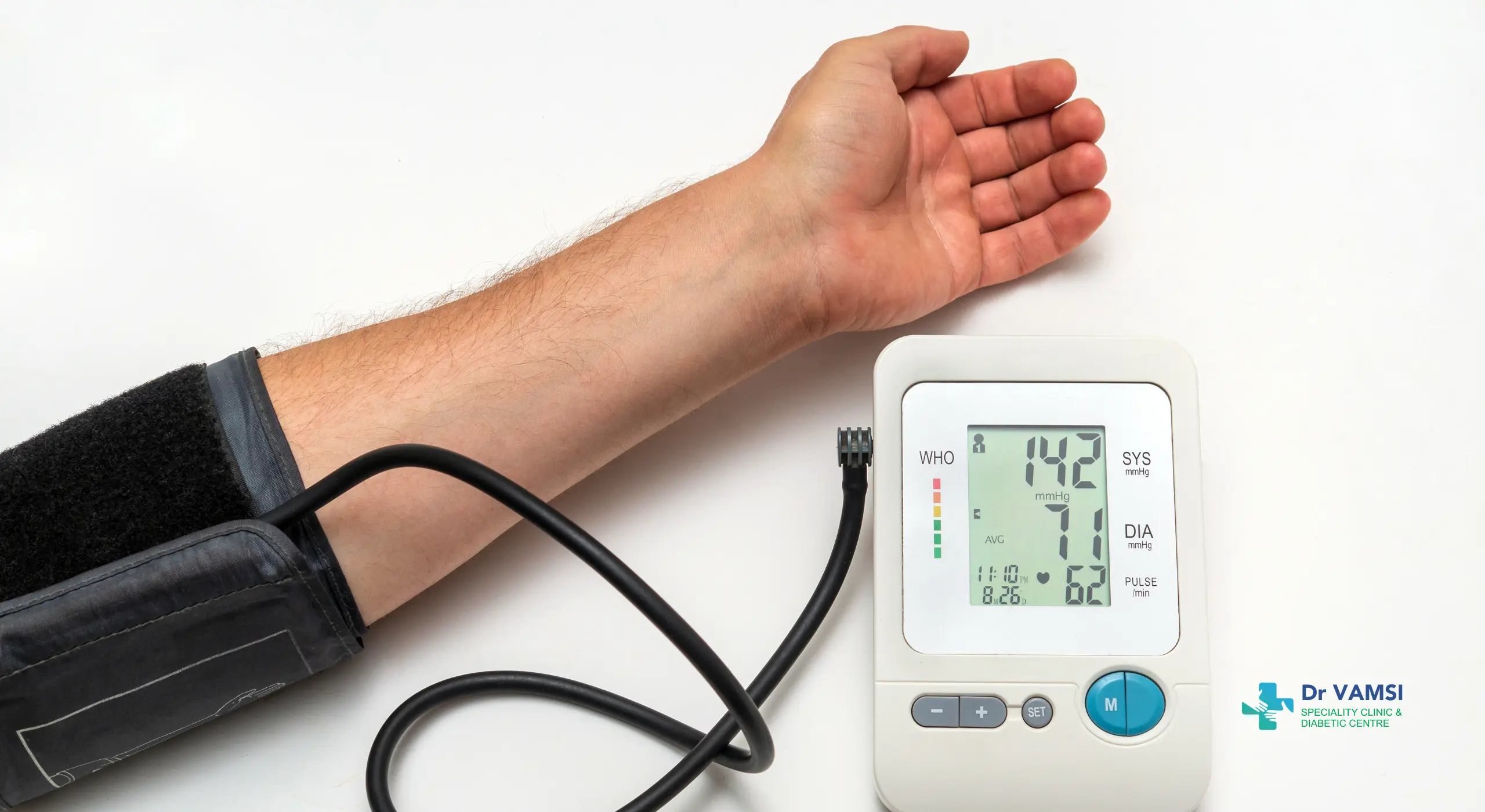
One high reading isn’t diagnosis—average 2-3 sittings. Home monitors catch “masked” hypertension (normal clinic, high home).
Why It Stays Silent: No Obvious Symptoms
Most feel normal until complications strike:
- Artery damage thickens heart (left ventricular hypertrophy).
- Kidney filters fail silently.
- Brain vessels weaken (stroke risk 4x).
Rare early clues: Morning headaches, buzzing ears, nosebleeds, fatigue. 95% asymptomatic—why annual checks matter.
Who’s at Risk? Common Triggers in Modern India
Non-modifiable:
- Age >40, family history.
- Indian ethnicity (genetic salt sensitivity).
Lifestyle culprits:
- Excess salt (>5g/day from pickles, restaurant food).
- Obesity (tummy fat releases toxins).
- Sedentary jobs (IT pros average 10 sitting hours).
- Stress (cortisol constricts vessels).
- Smoking, excess alcohol.
- Sleep apnea (night BP surges).
Bengaluru’s young professionals hit hard—fast food + deadlines.
Damage Timeline: What Happens Inside
Year 1-5: Endothelial dysfunction—arteries stiffen.
5-10: Plaque buildup, kidney strain.
10+: Heart failure, stroke, vision loss.
Each 20/10 mmHg over 115/75 doubles mortality. Early control adds 5-10 healthy years.
Simple Detection Methods: Clinic and Home
Clinic Check:
- Sit 5 min calm, feet flat, arm heart-level.
- Proper cuff size, 2 readings 1 min apart.
Home Monitoring (Gold Standard):
- validated upper-arm device (Omron, Dr. Morepen).
- Same time daily (morning/evening).
- Log 7-day average for doctor.
24-hour Ambulatory Monitor: Worn 24 hours, catches daily spikes, clinic prescribed.
Full body checkups include ECG, kidney tests for organ damage.
Lifestyle Changes: First-Line Defense (80% Effective)
Diet Overhaul (DASH for Indians):
- Cut salt: No papad, achaar; use lemon/spices.
- Potassium boost: Banana, spinach, curd, coconut water.
- Sample day: Oats breakfast, dal-roti lunch, grilled fish dinner.
Exercise: 45 min brisk walk daily drops 8-14 mmHg. Yoga (Shavasana) equals meds.
Weight: 5kg loss = 5-10 mmHg drop.
Stress: 10 min deep breathing twice daily.
Medications: When Lifestyle Isn’t Enough
First choices:
- ACE inhibitors/ARBs (protect kidneys).
- Calcium channel blockers.
- Low-dose diuretics.
Youth tolerate well; monitored via blood tests. 1-2 pills control 90%.
Detecting Secondary Hypertension (5-10% Cases)
Young onset (<30), resistant BP, sudden spikes? Check:
- Kidney artery narrowing.
- Thyroid/adrenal issues.
- Sleep apnea.
- Painkillers overuse.
Ultrasound, hormone tests pinpoint.
Monitoring Tools and Apps for Daily Tracking
- Smart cuffs: Bluetooth to phone.
- Wearables: Wrist BP (less accurate).
- Apps: BP log + reminders (HealthifyMe).
Share trends at quarterly visits.
Prevention: Start Screening Early
Who/When:
- Age 20 if family history/overweight.
- Annual post-30.
- Pregnancy (gestational risk).
Corporate wellness catches silent cases.
Myths About High Blood Pressure
- “One reading = diagnosis”—False, average needed.
- “Kids don’t get it”—10% teens now.
- “Meds forever”—50% reverse with lifestyle.
- “Garlic cures”—Helps mildly, not substitute.
Patient Success: Real Numbers
IT manager (38): 148/92 → 118/76 in 3 months—walks + salt cut. Teacher (45): Med-free after 5kg loss.
Early detection = control.
FAQs on High Blood Pressure
1. Symptoms before damage?
Rarely headaches, fatigue possible. Most silent till crisis.
2. Home vs clinic readings?
Home often 5-10 mmHg lower, more reliable for diagnosis.
3. Salt completely banned?
<5g/day total (1 tsp). Focus processed foods biggest source.
4. Exercise lowers BP how much?
Regular aerobic: 5-8 mmHg. Strength training adds 4 mmHg.
5. Emergency BP numbers?
180/120 + headache/chest pain—hospital immediately.